
- Golf Events
A week at Liv Golf Singapore 2026: When control overcame chaos

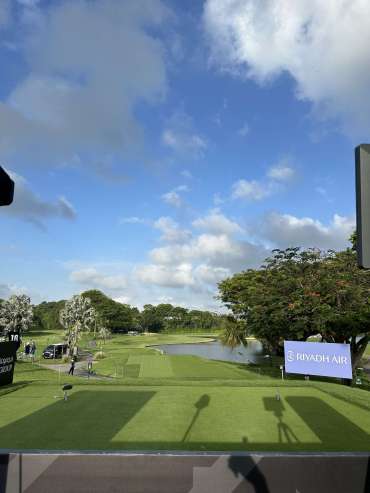
Liv Golf Singapore 2026, celebrated of March 12 to 15 in the Sentosa Golf Club, turned out to be one of the most complete and demanding tests that we have experienced this season. From the moment we stepped on the property, it became clear that it was not going to be a typical week of aggressive golf and low score. Everything in Sentosa was cozy: perfect streets, soft visuals and a disposition that seemed to reward the bold game. But as the rounds progressed, we quickly realized that this journey punished anything but total control. It was not about hitting big blows from time to time, but of Delete errors for four days in a row. the combination of Narrow landing zones, , thick tropical rough and Fast and grainy greens He forced the players to rethink their approach. Since Thursday morning, you could already see that if you couldn’t find streets, you were going to have trouble keeping up. And by Sunday, that pattern had Completely defined the leaderboard.
Our reflections: Precision under pressure
Going through the four rounds at the Sentosa Golf Club, what stood out the most was how demanding the conditions were, not only technically, but also physically and mentally.
Humidity changed everything. Loading distances fluctuated between 5 and 10 yards depending on the time of day, and fatigue became a real factor at the end of the rounds. The players were not only fighting the field, but also fighting their own consistency under stress.
From a performance perspective, we saw a strong dependency on data. Players and caddies constantly adjusted the numbers according to lie, humidity and temperature. Plane planning was extremely detailed, but even then, execution was still the deciding factor.
This is where Bryson DeChambeau differed from the field.
He is known for his power, but this week has been a matter of control. I always chose smarter lines from the tee, often sacrificing distance to secure position. That gave him a clear advantage: he played from the street much more often than the field average.
And in Sentosa, that difference was everything.
How the field was played: The numbers behind the challenge
From the tee to the green, Sentosa Golf Club showed off all its weaknesses. But the statistics made it even clearer where the tournament was won and lost.
➤ Driving Accuracy: Below standard across the field
The average accuracy in the field was around 57%, notably lower than typical professional averages (~62–65%). In several adjusted pairs, the rates of success on the street fell from the 50%.
Instead, DeChambeau was closer to the 65–68% in the week, standing well above the rest and consistently controlling the holes from the beginning.
More importantly, the players who came to the street won approximately Between +0.35 and +0.5 hits per hole compared to those who were in the rough.
➤ Greens in the Regulation (GIR): a great split
The global average of GIR for the field was about 62%, But the division between Fairway and Rough was dramatic:
- From the fairway: ~72% GIR
- From the approximate: ~48% gir
Dechambeau, playing from position most of the time, remained around the 70–75% GIR, earning steady birdie opportunities while others struggled to hit the green.
just a few 12 players all week They managed to exceed 70% GIR, and almost all ended up in the top 20.
➤ Hits won: where it happened
Separation The most revealing statistic we followed was that of the blows won by category:
- In the tee: The best players They got between +1.2 and +1.8 hits per round
- Focus: Around +1.5 hits per round for applicants
- Putting: anything above +1.0 per round It was a great advantage
Dechambeau did not necessarily lead all categories, but it was consistently positive in all three, which differentiated him. While others had a weak point, he avoided heavy losses.
➤ Putting: Survival in the greens
The greens in Sentosa were one of the toughest aspects of the week:
- Putt averages per round: ~30.1
- Putts per rot: ~1.82
- Average of 3 putts: 1.6 per round throughout the field
Grain and speed made distance control extremely difficult, especially from 20 to 40 feet.
Dechambeau’s main advantage? avoided mistakes. He was among the best in Avoidance of 3 putts And consistently stayed in seconds without stress.
Why Dechambeau Won: Playing the Right Game
What impressed us most about Bryson DeChambeau was not only the result, but how perfectly his strategy fitted with the demands of the field.
He did not try to dominate Sentosa with power. Instead, it was adapted.
- prioritized the fairways over the distance
- I was playing towards Safe areas of the greens Instead of chasing flags
- Accepted pairs when necessary and avoided accumulated errors
In four rounds, that approach was adding up. Even when the momentum changed—as during his 72nd round—he remained calm and restarted.
In the playoffs, that composure defined the result. Under pressure, he executed when he mattered most, while others faltered.
That is exactly what this course has rewarded all week.

The most important conclusion: where tools like inbounds make the difference
One of the most important things we noticed during the week was data-driven that the game has become. Every player we follow was heavily based on performance analysis: scatter tracking, trends and decision making patterns. And this is where a tool like inbounds It becomes incredibly valuable—not just for professionals, but for any competitive player trying to improve. On a circuit like Sentosa, the difference was not talent, but conscience.
A platform like Inbounds allows players to:
- tracking of the Driving precision trends over time
- Measure the Hits won In each category (from the tee, approach, putting)
- Analyze Failure patterns (left/right, long/short)
- understand the Gir percentages from different lies
- monitor the Putt performance (3-putts, conversion rates, distance control)
If we take this week as an example, the data clearly showed that Missing Fairways was the biggest problem. A player who uses band throws could identify that trend from the beginning—since he loses 0.4+ hits per hole from the tee“And adjust your strategy accordingly.” Instead of guessing, they would have Measurable tests Where are they losing shots from? The same goes for the putt. Many players this week did not lose for hitting the ball, but for a Bad speed control And too many triples. With proper monitoring, those weaknesses become visible and solvable. In short, tools like Inbounds serve as bridge between feeling and fact.
What this week in Sentosa makes it clear
Liv Golf Singapore 2026 showed us that the Elite Golf continues to be defined by intelligent control, discipline and decision making.
At Sentosa Golf Club, every missed street, every misreading, and every little mistake had consequences. It was not about who could get the most spectacular shots, but who could avoid the expensive ones.
That’s why Bryson Dechambeau stood out.
He didn’t just play well—he played smartly. He understood the course, adapted to the conditions and used a strategy based on consistency rather than risk.
And leave the week behind, that’s the biggest lesson.
At the highest level—and even in our own games—improvement doesn’t come from guessing.
It comes from understanding your numbers, trusting your strategy and executing with discipline when it matters most.
Conclusion: Dominance is built, not discovered
The success of Scottie Scheffler is not a celebration of the form. It is the validation of a process.
Its mastery is based on elite performance from tee to green, a precise approach game, controlled power, reliable recovery and low pressure volatility. Success in modern golf is no longer a mystery. It is designed through measurable advantages and is reinforced by smarter preparation.
For academies and college programs, the lesson is clear: the sooner players learn to understand and train these metrics, the closer they are to elite performance.
Scottie Scheffler doesn’t just earn more than his teammates.
It gives them fewer ways to beat him and provides them with a model of how true domain is built.
