
Just a few years ago, the jump from college golf to the PGA TOUR University often felt like one of the biggest leaps in professional sports. Even the best NCAA players typically spent years on developmental tours, learning how to compete against seasoned professionals before earning their first victory.
That gap is disappearing.
The recent success of Jackson Koivun, Michael Thorbjornsen, Tommy Morrison, and Derek Hitchner highlights this evolution. Koivun won the 3M Open, Thorbjornsen captured the Rocket Classic, while Morrison and Hitchner earned victories on the Korn Ferry Tour. All four players developed through the NCAA system and benefited from the competitive environment, coaching structures, and performance-focused approach that elite college programs provide.
These weren’t surprise stories or Cinderella runs. Anyone who followed NCAA golf over the past two seasons knew these names. Both players dominated college tournaments, competed under immense pressure, and developed inside programs where winning wasn’t an expectation, it was the standard.
Their victories tell a much bigger story than two young stars lifting trophies. They highlight how college golf has become the strongest development pathway in the world, and why today’s best NCAA programs are producing professionals who arrive on Tour ready to compete immediately.
More importantly, they show how modern player development is changing. Elite coaching still matters. Talent still matters. But increasingly, the difference comes from something less visible: understanding performance through data.
That’s where platforms like Inbounds are beginning to reshape the way college golf operates.
Why NCAA Golf Is Producing PGA TOUR Winners Faster Than Ever
There was a time when college golf served mainly as a place for players to mature before turning professional. Today, it’s something much more sophisticated.
The introduction of PGA TOUR University has transformed collegiate golf into a direct pipeline to the professional game. Players are rewarded not only for isolated tournament victories but for sustained excellence over an entire college career. Consistency, resilience, and long-term performance now carry more value than ever before.
That has changed how coaches build programs.
Winning one tournament is important. Producing players capable of succeeding on the PGA TOUR is becoming equally significant.
When Jackson Koivun arrived at Auburn, expectations were already enormous. Yet he exceeded them almost immediately, earning one of the most impressive freshman seasons college golf has seen in years. Week after week, he demonstrated a quality that separates great players from good ones: he rarely gave shots away.
Likewise, Michael Thorbjornsen spent his collegiate career proving that power alone wasn’t what made him special. His decision-making, patience, and ability to perform under pressure consistently placed him among the nation’s elite.
Neither player looked overwhelmed when they reached the PGA TOUR because they had already spent years competing in environments that demanded excellence every single week.

Winning Isn’t About Birdies. It’s About Mistakes.
Watch the highlights from Koivun’s 3M Open victory or Thorbjornsen’s Rocket Classic triumph, and it’s easy to focus on the incredible iron shots or clutch putts.
But the real difference isn’t found in the highlights.
It’s found in everything that didn’t happen.
There were very few unnecessary risks. Almost no emotional decisions. Hardly any doubles or momentum-killing mistakes.
That’s exactly how today’s best college programs teach golf.
Elite NCAA coaches understand that championships aren’t usually won by making the most spectacular shots. They’re won by consistently avoiding costly ones.
Professional golf rewards patience just as much as aggression.
College players now spend countless hours learning how to manage golf courses, identify high-percentage targets, recover intelligently after mistakes, and make decisions that maximize scoring over 72 holes, not just one spectacular afternoon.
Those lessons don’t always appear on television.
But they show up on Sunday leaderboards.
Why Golf Performance Data Matters More Than Ever
One of the biggest changes in college golf over the past decade isn’t something spectators immediately notice.
It’s data.
Not long ago, coaches primarily looked at scoring averages and tournament finishes. If a player shot 68, everyone assumed they had played well. If they shot 75, they probably needed to “hit it better.”
Today’s programs know the game isn’t that simple.
Two players can both shoot 71 while playing completely different rounds.
One golfer may gain strokes with approach shots but lose around the greens.
Another may scramble brilliantly after missing greens but struggle with putting inside ten feet.
The score tells coaches what happened.
The data explains why it happened.
That’s a huge difference.
Instead of reacting emotionally to one round, coaches can identify patterns that develop over weeks and months.
Is a player consistently losing strokes from 125–150 yards?
Are they making too many bogeys after missed fairways?
Does their scoring improve when they hit more conservative tee shots?
Those answers are often hidden beneath the final scorecard.
How Inbounds Helps NCAA Coaches Improve Player Development Through Data
This is where a platform like Inbounds becomes incredibly valuable for college programs.
Every tournament generates hundreds of decisions and thousands of data points. Without a structured way to organize that information, much of it disappears once the next event begins.
Inbounds allows coaches and players to transform raw statistics into meaningful insights.
Instead of simply recording scores, coaches can monitor trends throughout an entire season.
They can quickly identify:
- Which players consistently improve under tournament pressure.
- Which parts of the game are costing the most strokes.
- Whether practice sessions are translating into better competitive performance.
- How individual players compare over time instead of judging one tournament in isolation.
- Which areas deserve more attention before the next event.
For players, the benefits are equally significant.
Imagine finishing a tournament convinced your putting let you down.
You open your statistics and discover something surprising.
Your putting numbers were actually among your best all season.
Instead, your approach shots from 140–160 yards finished farther from the hole than usual, leading to longer birdie attempts and more difficult pars.
Without data, you spend the next week practicing putting.
With data, you spend the week fixing the actual problem.
That’s the difference between practicing hard and practicing smart.
Building Better Golfers, Not Just Better Scores
Perhaps the greatest value of platforms like INBOUNDS isn’t the statistics themselves.
It’s what players learn from them.
The strongest college golfers develop an ability to evaluate themselves objectively.
They stop saying, “I played terribly.”
Instead, they ask:
“Where did I actually lose shots?”
That small change in mindset completely transforms development.
Rather than chasing swing changes after every poor round, players begin trusting long-term trends.
Confidence becomes more stable.
Practice becomes more efficient.
Improvement becomes measurable.
Those habits don’t disappear after graduation.
They travel with players throughout their professional careers.
When golfers like Jackson Koivun and Michael Thorbjornsen arrive on the PGA TOUR, they already understand how to review rounds, identify weaknesses, and build practice plans based on evidence rather than emotion.
That preparation may be one of the biggest reasons we’re seeing young professionals win sooner than ever before.
The Future Is Already Here
The victories of Jackson Koivun at the 3M Open, Michael Thorbjornsen at the Rocket Classic, and Korn Ferry Tour champions Tommy Morrison and Derek Hitchner are not isolated success stories—they are evidence of a changing landscape. PGA TOUR University is accelerating the transition from college golf to the professional ranks, while NCAA programs are developing more complete golfers than ever before.
Today’s elite college players leave campus with years of experience competing under pressure, following structured practice plans, and analyzing their performance through data. Platforms like INBOUNDS are becoming an important part of that process, helping coaches identify trends, measure progress, and create practice sessions that directly address where players can gain strokes.
The result is a new generation of professionals who arrive on Tour with more than talent. They arrive with systems, habits, and a deeper understanding of their own performance. As recent results continue to show, the future of professional golf isn’t waiting to be developed after college—it is already being built inside NCAA programs, one practice session, one statistic, and one tournament at a time.
As PGA TOUR University continues producing players capable of winning almost immediately, one conclusion becomes increasingly difficult to ignore.
The future of professional golf isn’t being built after players leave college.
It’s being built every day inside NCAA practice facilities, where every shot is tracked, every trend is analyzed, and every practice session has a purpose.
And if recent PGA TOUR results are any indication, that future has already arrived.

How to Build a Golf Practice Routine Based on Your Stats
Most golfers have a practice routine. Fewer have a practice routine that is actually based on what their game needs.
It’s easy to arrive at the range, hit a few drivers, work through the bag and finish with some wedges. You leave feeling like you had a good session. But did you work on the part of your game that is actually costing you strokes?
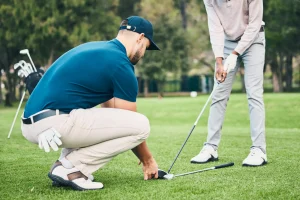
How to Know If You’re Really Improving at Golf: Learn How to Measure Your Progress
Getting better at golf doesn’t always mean your handicap drops every few weeks. You can be playing better golf while your Handicap Index barely moves. The opposite can happen too: you string together one good round and feel like you’ve made a huge leap, when in reality there’s no real, consistent change in your game yet

How to Lower Your Golf Handicap: train smarter, not just more
Lowering your golf handicap is not simply about playing more rounds or spending more hours on the range. The key is understanding where you are losing strokes, what is affecting your performance and what you should work on next.
